Collision repair has changed. Vehicles rolling into your shop today are no longer built from a single material, and your welding setup should reflect that. Mixed steel grades, structural aluminum, bonded joints, and EV battery-adjacent structures all demand a different approach, and no single welder handles all of them well.
Shops that piece together disconnected machines face real consequences: inefficient workflows, training gaps, and inconsistent repair quality. The answer is a welding ecosystem, a coordinated lineup of equipment, power sources, and training designed to work together as one solution.
What “One Welding Ecosystem” Really Means for a Shop
A welding ecosystem is not a single box purchase. It starts with one capable welding platform as the foundation, then extends with purpose-built supporting equipment for specific repair scenarios.
The outcomes matter more than any individual specification. When your equipment works as a system, you get consistent weld quality across materials, fewer workflow bottlenecks, and faster technician decision-making on even the most complex repairs.
The Core Welding Platform: Your Foundation Equipment
The foundation of any strong ecosystem is a multi-process welding system that handles the full range of modern repair requirements without constant machine swaps. That means:
- Steel MIG/MAG and pulse MIG for high-strength steels
- MIG brazing for OEM-specified joints
- Aluminum MIG and TIG processes
Software-driven weld programs control heat input, reduce distortion, and protect advanced materials. Technicians can switch between materials and processes quickly, keeping repairs moving without setup delays.
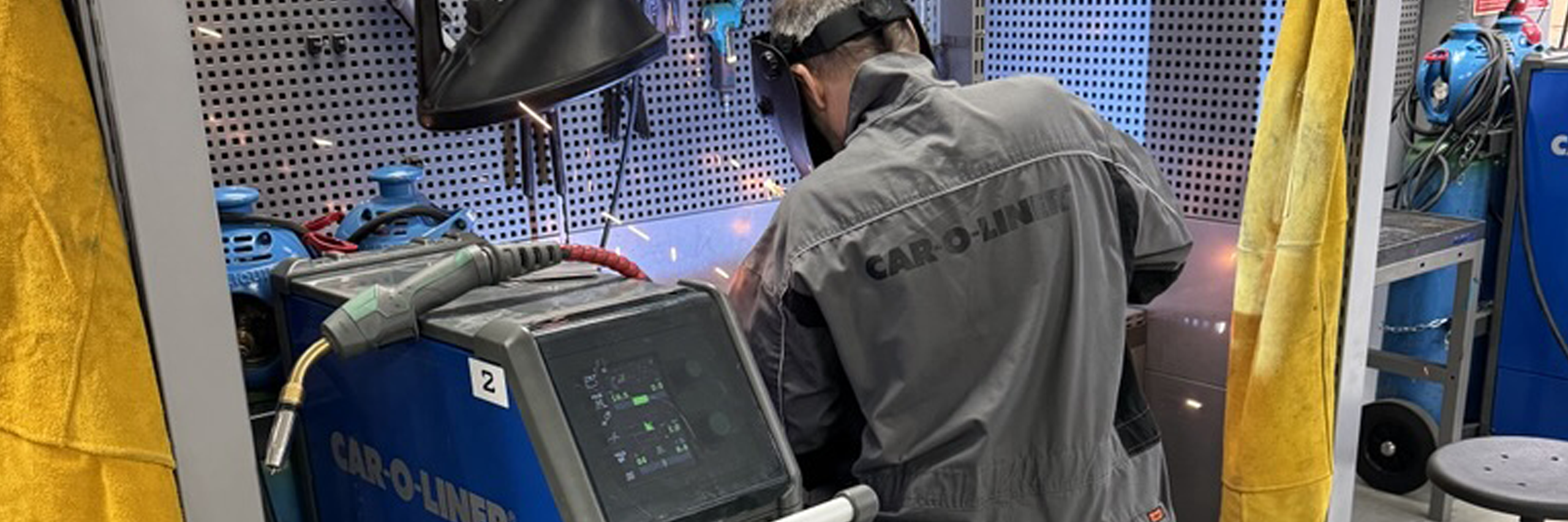
Car-O-Liner builds this ecosystem approach directly into its automotive welder lineup. The CMI TWIN delivers multi-process capability for shops handling a wide range of vehicle types, while the CMI 161 provides a compact solution for focused steel repair work. For shops requiring advanced pulse capability on high-strength steels, the CMI 300 Pulse offers precise heat control and consistent results.
Expanding Capability With Specialized Equipment
Once the core platform is in place, the ecosystem grows through supporting equipment that addresses specific repair needs without duplicating footprint or effort.
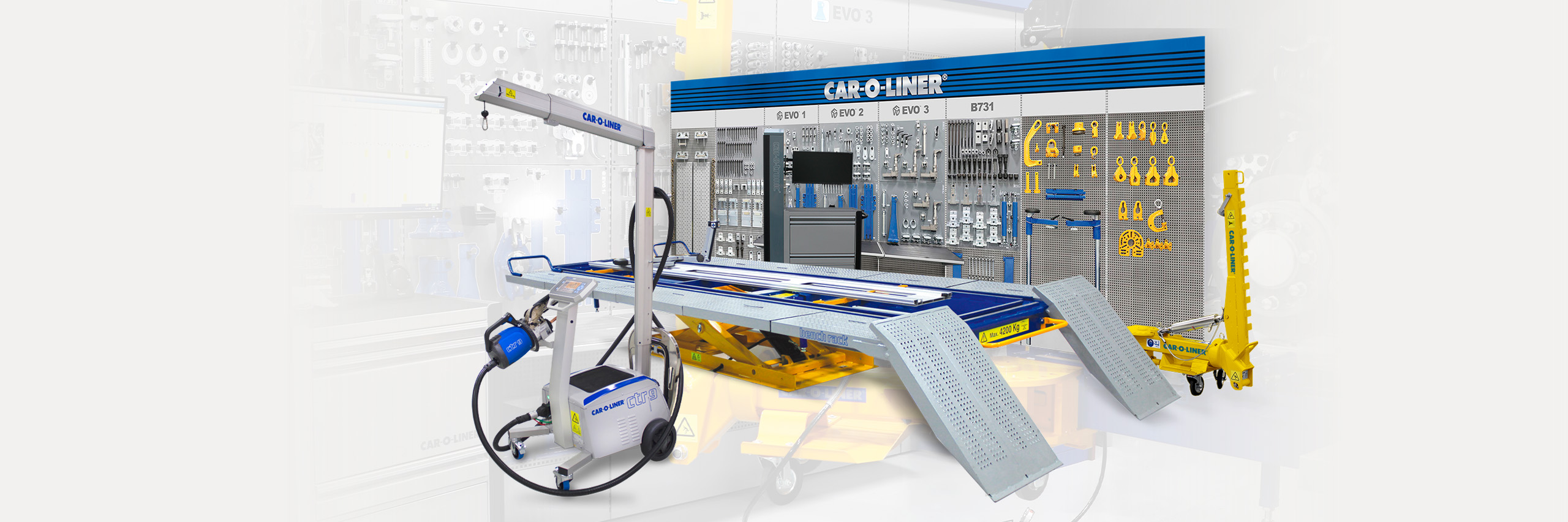
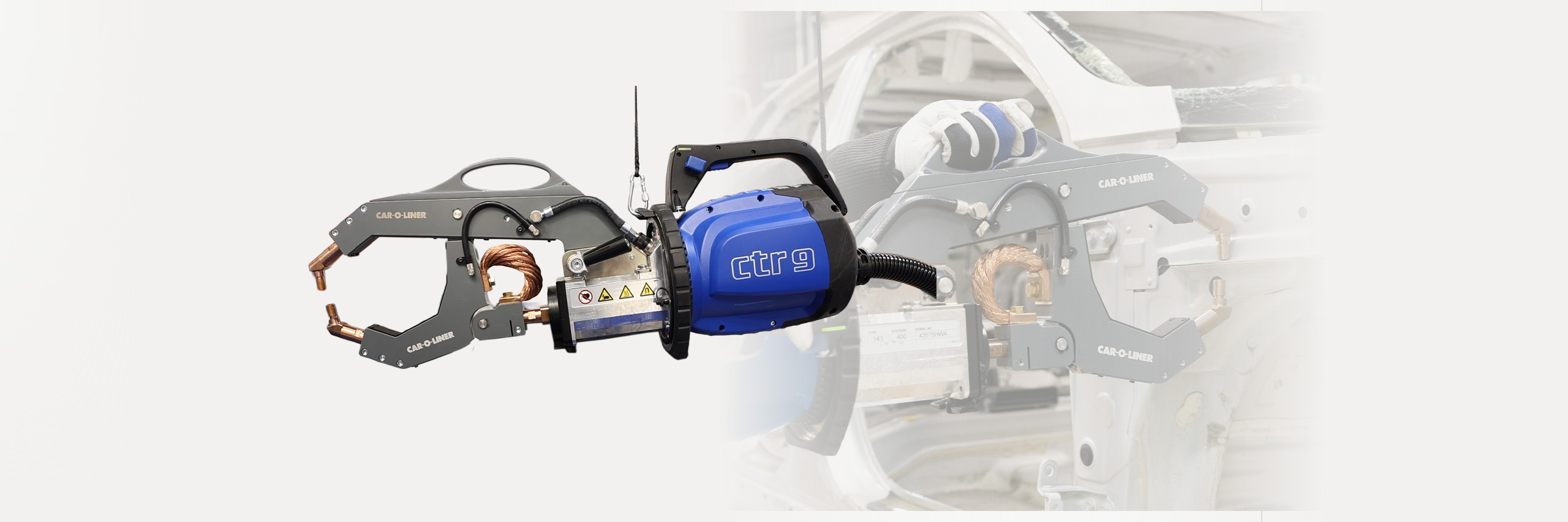
Resistance spot welders replicate OEM spot welds on structural steel panels with accuracy. For aluminum work, dedicated workstations and material-safe tooling prevent cross-contamination and protect panel integrity. Mechanical joining equipment covers the full range of modern aluminum repair methods, including riveting, rivet bonding, and flow-drill fastening.
Each addition extends what your shop can handle. None of it creates redundancy when the equipment is designed to work within the same system.
Handling EVs and Advanced Structures
EVs raise the bar on precision, control, and documentation. Battery-adjacent structures and reinforced aluminum zones require stable power delivery and controlled heat input to avoid damage and ensure structural integrity.
A well-built ecosystem addresses this through repeatable, documented processes. Stored weld programs and locked OEM-approved settings allow technicians to perform EV-related repairs with confidence. When laser or other specialized processes are added later, a modular ecosystem absorbs them without disruption.
One Ecosystem, Fewer Machines, Better Workflow
An integrated lineup reduces equipment clutter, eliminates redundant training, and limits setup errors. When technicians work with shared interfaces, controls, and accessories across the equipment, they move faster and make fewer mistakes.
The benefits extend to both technicians and shop owners:
- For technicians: Familiar workflows, faster setup, and higher confidence on complex repairs
- For shop owners: Lower total cost of ownership, better floor utilization, and a setup that scales as repair demand grows
Training and Qualification
Advanced equipment requires equally advanced training. Manufacturer-led programs covering aluminum welding techniques, pulse MIG, MIG brazing, and OEM-specific repair procedures help technicians build the skills to use the equipment correctly from day one.
Ecosystem-based training standardizes technique across the shop and simplifies technician qualification. Aligning equipment purchases with training programs from the start prevents the gaps that develop when shops add machines without adding knowledge.
Proving Weld Quality to OEMs and Insurers
OEMs and insurers increasingly require documented weld parameters and repeatable repair outcomes. A modern welding ecosystem supports that demand through stored weld programs and locked OEM-approved settings that produce consistent quality regardless of which technician performs the repair.
Documentation is not an afterthought in a well-designed ecosystem. It is a built-in feature that protects your shop and validates your work.
Why an Ecosystem Approach Future-Proofs the Shop
New materials and repair methods will continue to emerge. A modular ecosystem adapts more readily than a collection of standalone machines. Shops can add new equipment, new processes, and new OEM approvals without starting over.
That adaptability is the core value of the ecosystem approach. Rather than reacting to every change in vehicle design with a new purchase decision, your shop stays prepared because the foundation already supports what comes next.
Quick Decision Checklist: Is a Welding Ecosystem Right for Your Shop?
- Do you want one integrated solution instead of managing multiple disconnected machines?
- Can your current setup handle steel, aluminum, and structural repairs without workarounds?
- Are you prepared for EV and next-generation vehicle materials?
- Does your equipment vendor offer both equipment and training as a unified package?
- Will an ecosystem approach reduce your footprint while expanding capability?
If you answered no to any of these, it may be time to evaluate your welding setup as a system. Explore the Car-O-Liner automotive welder lineup to see how a coordinated ecosystem can cover every repair that comes through your door.